Ever walked a neighborhood and felt like every block told a different design story? That’s the pull of Congress Park and the overlapping 7th Avenue Historic District. If you love architecture, streetscape character, and the way older homes reveal a city’s history, this pocket of Denver gives you plenty to notice. Let’s dive in.
Why Congress Park Stands Out
Congress Park is bounded by York Street, Colfax Avenue, Colorado Boulevard, and Sixth Avenue. According to Denver Public Library, the area began as Capitol Heights in the late 1880s as Denver expanded, with growth shaped by tramway lines along East Colfax, East 12th, and East Sixth.
The name “Congress Park” came later. Denver Public Library notes that the label was adopted in the 1970s, when real estate agents used it as a more marketable neighborhood name. That alone says something important about the area: what you see today is layered, not planned all at once.
How the Historic District Fits In
The East 7th Avenue Historic District overlaps much of Congress Park’s central and eastern blocks. City records show the district was designated in 1993, with a period of significance prior to and including 1943, and the Steele Street Extension was added in 2021.
Denver Public Library describes the district as one of Denver’s largest historic districts, built mainly from the 1890s through the 1930s. It stretches from Logan Street to Colorado Boulevard and from East 6th to East 8th Avenues, which helps explain why the neighborhood feels so visually rich and consistent in certain stretches.
What You’ll See on the Streets
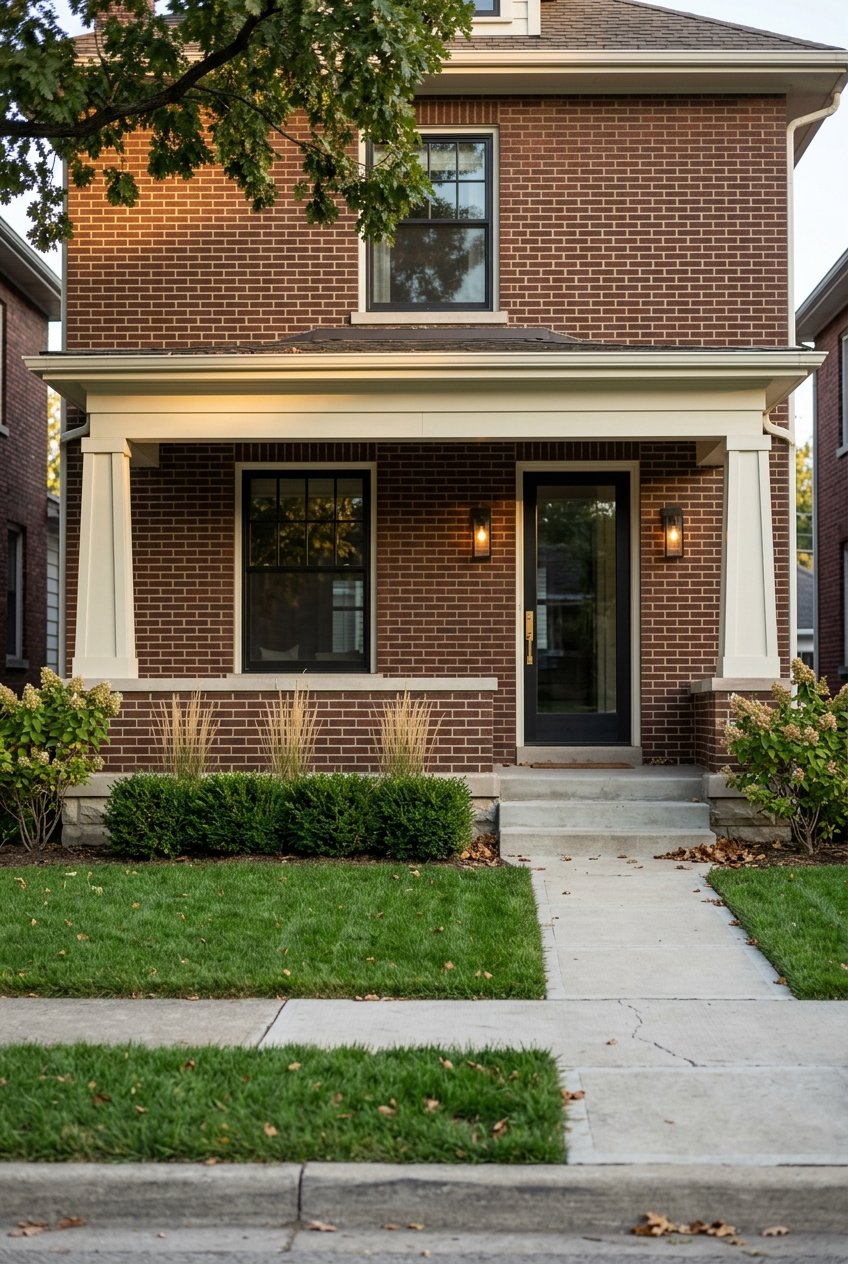
If you tour Congress Park with architecture in mind, you are essentially walking through a timeline of early 20th-century Denver housing. Denver Public Library points to Queen Anne and Victorian homes near the oldest edges, followed by Craftsman Denver Squares and later 1920s bungalows.
That mix matters because the neighborhood is not one-note. You can move from more ornamental homes to simpler, more practical forms within a few blocks, and the transitions often feel natural rather than abrupt.
Congress Park also includes more than detached houses. Early 20th-century duplexes and apartment buildings are part of the neighborhood fabric too, which gives the area a broader residential vocabulary and a more layered urban feel.
Signature Styles to Look For
Queen Anne and Victorian Roots
On some of the older edges of the neighborhood, you can still spot homes tied to Congress Park’s earliest development period. These houses often help you read the neighborhood’s starting point before later bungalow and Denver Square construction filled in many of the blocks.
For architecture lovers, these homes provide visual contrast. They frame the shift from late 19th-century residential design into the more restrained and practical styles that followed.
Denver Squares and Craftsman Influence
Denver Squares are a major part of the local story. In the East 7th Avenue area, Denver Public Library specifically identifies the Doud House and two neighboring homes as fine examples of Denver Square variations.
This is where the neighborhood becomes especially fun to study. What looks uniform at first glance often reveals subtle differences in proportions, porches, detailing, and materials once you slow down and really look.
1920s Bungalows
Bungalows bring another layer to Congress Park’s architectural appeal. They reflect the neighborhood’s continued buildout in the 1920s and add a more compact, approachable scale to blocks that might otherwise feel dominated by larger homes.
For buyers, that means architectural character exists at more than one size and price point. For casual walkers, it means the neighborhood never feels visually flat.
Tudor, Mediterranean, and Neoclassical Highlights
The 7th Avenue corridor introduces even more stylistic range. Denver Public Library highlights 720 Emerson Street as an English Tudor house built in 1906 and remodeled in 1926 by Burnham Hoyt.
It also notes 930 East 7th Avenue as a Mediterranean Revival residence built in 1910 to 1911 by William F. Fisher and Arthur A. Fisher. Other notable examples include the Wood-Morris-Bonfils Mansion, described as French Mediterranean Revival, and the Grant-Humphreys Mansion, a Neoclassical home built in 1901 to 1902.
Together, these examples show why the district appeals to people who care about design. You are not just looking at one historic style repeated over and over. You are seeing a collection of forms and influences that reflect changing tastes over several decades.
Why East 7th Avenue Feels Different
East 7th Avenue has a distinct boulevard quality that sets it apart from surrounding streets. Denver Public Library ties the parkway to the City Beautiful era and notes that the city purchased the parkway land in 1912, with Saco DeBoer working alongside the Frederick Law Olmsted firm on plantings.
The result is more than a row of old homes. The double row of elms created a high tree canopy, and many of the original trees remain, giving the avenue a sense of scale and continuity that architecture fans tend to appreciate as much as the homes themselves.
The district also has a clear pattern of massing. Denver Public Library describes larger homes on the parkway, with smaller homes on the north-south streets, plus duplexes and terraces scattered among them. That variety keeps the area from feeling overly formal or frozen in time.
Historic Character Meets Everyday Living
One of the best things about Congress Park is that it does not read like a museum district. It feels lived in. That matters if you are drawn to historic architecture but still want a neighborhood that functions as part of daily life.
The park itself reflects that balance. Denver Parks & Recreation’s Congress Park playground and walks project, completed in summer 2024, expanded and improved the playground, addressed safety and accessibility, complemented nearby pool improvements, and improved sidewalk connections through the park.
That blend of old housing stock and ongoing public improvements is part of the neighborhood’s appeal. You get historic character, but you also get signs of continued investment in how people use the area today.
What Home Types You Can Find
If you are considering a move here, the housing mix is broader than many buyers first expect. The area includes early 20th-century single-family homes, duplexes, apartments, and mansion-scale residences.
You will also find evidence of adaptive reuse. Denver Public Library documents the Stevens School conversion into condominiums and Firehouse No. 15 being transformed into two units. That history supports a practical point: architecture lovers here do not have to choose between originality and livability in such a strict way.
Many properties show layers of change over time. You may see homes with older exterior character and more updated interiors, or buildings that have been repurposed while still contributing to the historic feel of the street.
What Buyers Should Know About Preservation
If you are shopping within the historic district, design review is a real part of ownership. The City and County of Denver states that Landmark Preservation reviews proposed exterior alterations, additions, new construction, signs, and non-vegetative site work for properties in historic districts.
The district guidelines also state that all properties within a historic district boundary are subject to design review. Garage work in a historic district requires a certificate of appropriateness as well.
Along East 7th Avenue, the parkway can add another layer. Denver’s landscape guidelines say Denver Parks and Recreation regulates development adjacent to parkways, including setback requirements and design restrictions for buildings, walls, fences, and curb cuts.
That may sound restrictive at first, but for many architecture-minded buyers, it is part of the appeal. Preserved streetscapes, mature trees, and review of visible exterior changes tend to support the visual continuity that makes these blocks special.
Why This Area Appeals to Design-Conscious Buyers
If you care about architecture, Congress Park offers more than pretty facades. It gives you a chance to live among homes that show Denver’s residential evolution, from late 19th-century roots through the bungalow era and into larger boulevard homes shaped by City Beautiful planning ideas.
It also offers range. You can admire mansion-scale architecture on East 7th Avenue, then turn onto a side street and find more modest homes, duplexes, or apartment buildings that still contribute to the area’s historic texture.
From a real estate perspective, this is the kind of neighborhood where design, location, and long-term appeal often intersect. If you are trying to balance emotional fit with practical thinking, that combination is worth a close look.
Whether you are buying a character-rich home, planning your next move, or trying to understand how historic context affects value, working with someone who can read both design and market nuance helps. If you want thoughtful guidance on architecture-driven neighborhoods in central Denver, connect with Joey Hoisescu.
FAQs
What kinds of homes are in Congress Park and the 7th Avenue Historic District?
- You will find mostly early 20th-century single-family homes, along with duplexes, apartments, and some mansion-scale properties.
Is Congress Park the same thing as the East 7th Avenue Historic District?
- No. Congress Park is a neighborhood, while the East 7th Avenue Historic District is a designated historic district that overlaps part of the neighborhood.
Can you renovate a home in the East 7th Avenue Historic District?
- Yes, but exterior and site changes in the historic district are reviewed by Denver Landmark Preservation, and some projects may need additional approvals.
Why is East 7th Avenue so visually distinctive in Denver?
- Its boulevard setting, City Beautiful planning influence, historic homes, and mature tree canopy create a strong sense of scale and continuity.
Are there updated homes in Congress Park, or is everything historic inside too?
- The area includes both more original-condition properties and homes or buildings that have been remodeled or adaptively reused while keeping older exterior character visible from the street.