Chad and Jen Gauerke have been sitting on an idea for their Sunnyside property for a while. Their son is out of college, working full time, and still can't afford to live on his own. Their plan was simple: build a small unit in the backyard, let him live there until he's ready to move on, then rent it to someone else who needs an affordable spot near the city core.
"Regis University is nearby, and we could rent to a student or another teacher," Jen told Westword this month.
That sentence is the whole story of what's happening to ADU-zoned property in Sunnyside right now. It sounds like a simple backyard project. It is actually two very different real estate outcomes, and as of 2026, a set of new lending rules has widened the gap between them. If you're shopping a Sunnyside lot that's "zoned for a duplex or ADU," or trying to price one you already own, the difference between those two words, zoned and has, now shows up on a loan application in a way it never used to.
The zoning right came before most of Denver's did
Sunnyside isn't newly eligible for accessory dwelling units. For years, Denver only allowed ADUs on portions of the west side of the city, and Sunnyside was one of the neighborhoods inside that boundary, well before the citywide zoning expansion opened the door everywhere else. Most Sunnyside single-unit lots carry the U-SU-C1 designation, which sets a 5,500 square foot minimum lot size and permits an ADU by right. Larger or double lots often carry the U-TU-C two-unit designation, which allows a duplex or an ADU alongside the primary home. You'll see this specifically in how oversized Sunnyside lots get marketed, a double lot well over 6,000 square feet, for instance, advertised as zoned for a duplex or an ADU and open to a buyer, investor, or developer.
The size of what you're actually allowed to build scales with the lot. A lot under 6,000 square feet caps the ADU footprint at 650 square feet. Between 6,000 and 7,000 square feet, that grows to 864 square feet. Above 7,000 square feet, you can go up to 1,000 square feet. The structure also has to sit in the rear 35 percent of the lot and can't run longer than 36 feet in one direction. None of this is exotic. What matters is that Sunnyside has had this right long enough that its housing stock should, by now, have real built examples to compare against, not just zoning maps.
Why the appraisal still doesn't reward the zoning
Here's where the story stalls for a lot of buyers. A zoning designation tells a lender what you're allowed to build. It doesn't tell an appraiser what to add to the price.
Appraisers value most residential property through the sales comparison approach, pulling recently sold comparable homes and adjusting for differences. Fannie Mae's own guidance is explicit that an ADU should not be folded into the main home's gross living area. Its value gets captured only through adjustments in that comparison, and when there aren't enough sold comps with similar ADUs nearby, appraisers tend to land conservative, sometimes valuing an unbuilt or newly built unit in the tens of thousands even when it cost far more to construct. Legal status decides most of the outcome. A permitted ADU with a certificate of occupancy gets treated as real square footage. An unpermitted structure, no matter how nice, often gets valued as storage or ignored entirely.
That means a lot marketed as "zoned for ADU" is selling you permission, not equity. The zoning right is real and it's valuable, but until something is actually built, permitted, and comparable sales exist to support it, an appraiser has almost nothing to lend against.
The 2026 rule that only helps once the unit is standing
This year brought a real shift, but it landed on the financing side, not the appraisal side, and it only applies to ADUs that already exist.
Fannie Mae now lets buyers count ADU rental income toward their qualifying income on a conventional loan, and it arrived close enough behind Colorado's statewide push to legalize ADUs on nearly every single-family lot that the two changes read as one story for Denver Metro buyers. The mechanics stack two limits at once:
- Lenders generally credit around 75 percent of market or lease rent toward qualifying income
- Total ADU income used can't exceed 30 percent of the borrower's overall qualifying income
- The appraiser has to identify the unit as a legal or legal-nonconforming ADU under local zoning
- The rent has to be documented, either through a lease if the unit is occupied or through a Comparable Rent Schedule the appraiser prepares to establish market rent
- The policy applies to a one-unit principal residence on a purchase or limited cash-out refinance, not to non-owner-occupied investment property
Read that list again and notice what it requires before any of it applies: a permit, a legal record, and a documented rent figure. A basement someone finished without pulling a permit doesn't qualify, even if it looks exactly like an ADU. Neither does an empty, zoned backyard. The rule is generous to buyers looking at a home that already has a working, legal unit. It offers nothing to a buyer looking at raw potential.
What that actually splits into on a Sunnyside lot
| Zoned lot, nothing built | Permitted, built ADU with documented rent | |
|---|---|---|
| Appraisal treatment | Little to no added value, thin or absent comps | Valued through comparable sales adjustments, legal status confirmed |
| Financing / qualifying treatment | No income to count, no unit to document | Up to 30% of qualifying income credited at ~75% of documented rent |
| Cost still ahead of you | $236,000 to $450,000 in construction, depending on size, finish, and site, per local builder cost ranges | Sunk cost already spent, upside already realized |
| Typical timeline to value | Four to eight months of plan review and permitting before construction even starts | Already generating rent or occupancy history |
That's a meaningful spread. Denver-area ADU construction typically runs $236,000 to $310,000 for a straightforward build, with higher-end finishes and site constraints pushing that toward $450,000, while garage conversions land at the lower end. A market-rate ADU in a desirable Denver neighborhood can rent for $1,200 to $2,000 a month. Those numbers only start working for a buyer or owner once the unit exists and has a paper trail. Before that, they're a pro forma, not a loan input.
Two real Sunnyside projects, two different stages
You can see both categories playing out in the neighborhood right now. ArcWest Architects is currently designing an ADU on a Tejon Street lot in Sunnyside where none of the property lines actually abut a street, an unusual situation the firm had to work through directly with the city before confirming the ADU was allowable at all. That's a project still in the zoned-but-not-built phase, working through the exact permitting friction described above.
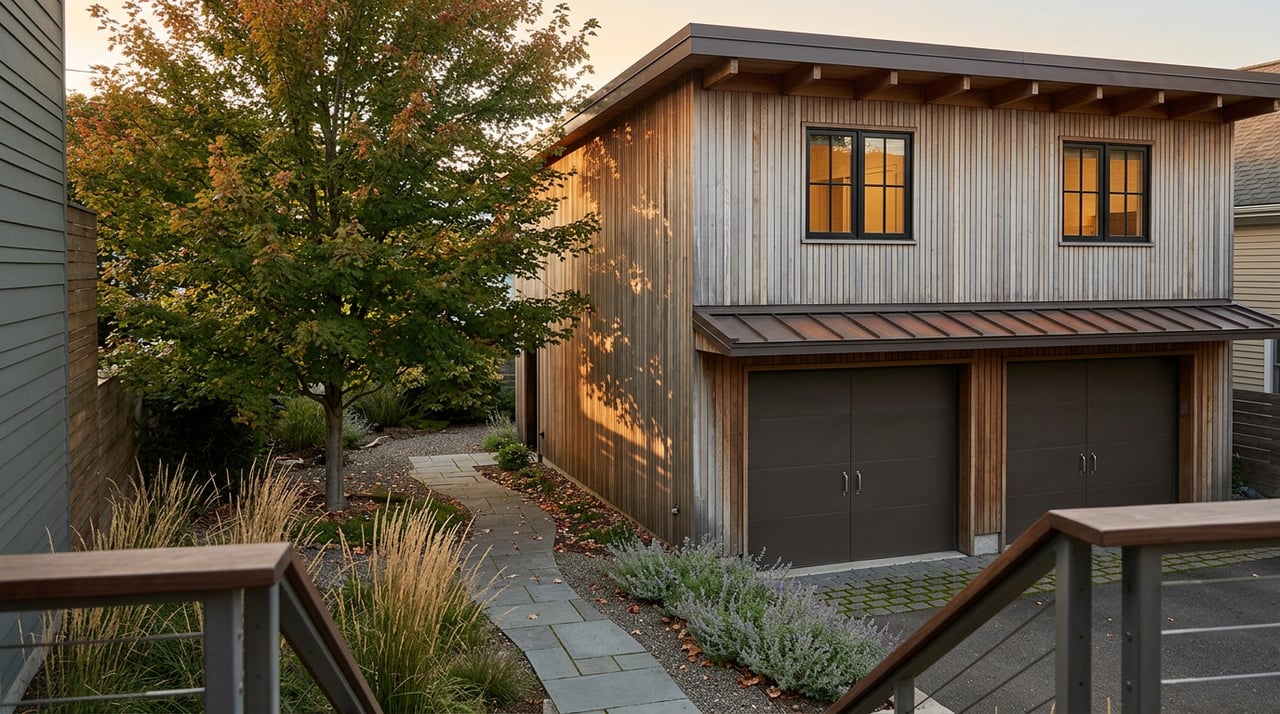
Prenvalley Builders, by contrast, completed a two-story garage ADU in Sunnyside in the summer of 2024, a 2.5 car garage below with two bedrooms, one bathroom, and vaulted ceilings above. That unit has had two years to build rental history and sits in the category a 2026 buyer could actually use to qualify for a bigger loan, assuming it's leased and documented.
Before you write the offer or set the price
If you're shopping a Sunnyside lot marketed around ADU potential, get the permit history and certificate of occupancy status before you factor any rent into your own budget. Ask directly whether a lease exists or whether the seller has a Comparable Rent Schedule from an appraiser. If the answer is no to both, treat the ADU as a construction project you're financing yourself, not a number a lender will credit you for today.
If you're the one selling a home with a built, permitted, rented ADU, gather that lease and any rent history before you list. It's no longer just marketing language. It's underwriting evidence a buyer's lender can actually use, and pricing your home to reflect that should start with the paperwork, not the square footage.
One more local wrinkle worth knowing: Sunnyside isn't among the Denver neighborhoods with additional landmark preservation review for detached ADUs, unlike Wash Park, parts of Capitol Hill, Cherry Creek, and Country Club, where that review can add two to four months to a permit timeline. Standard plan review still applies, generally four to eight months, but you're not stacking a historic district process on top of it.
Frequently asked questions
Does Colorado law require Denver to allow ADUs? Yes. Colorado's HB 24-1152, signed in May 2024, requires municipalities with more than 1,000 residents to allow at least one ADU per single-family lot by right, with compliance required by July 1, 2025. Denver's own ordinance predates the state law and already covered Sunnyside.
Do I have to live on the property to build an ADU? Yes. Denver requires either the primary home or the ADU to be the owner's principal residence, which rules out treating the purchase as a pure investment play where neither unit is owner-occupied.
Can I count short-term rental income the same way? Denver requires a Short-Term Rental license, roughly $250 a year, to rent any unit for less than 30 days. Long-term rentals need no license. The qualifying-income rule described above is built around documented, longer-term lease income, not nightly rates.
How long should I expect permitting to take on a Sunnyside ADU? Plan review and permitting for a detached ADU in Denver commonly runs four to eight months, and Sunnyside doesn't carry the added historic-district review that slows projects down in neighborhoods like Cherry Creek or Wash Park.
If you're weighing a Sunnyside lot with ADU language in the listing, or you already own one and want to know what your built, permitted unit is actually worth to a lender, that's exactly the kind of pricing conversation worth having before you set a number. Joey Hoisescu works these Sunnyside deals directly and can walk through what your specific lot, zoning, and paperwork actually support. Get a free home valuation and find out where you stand.