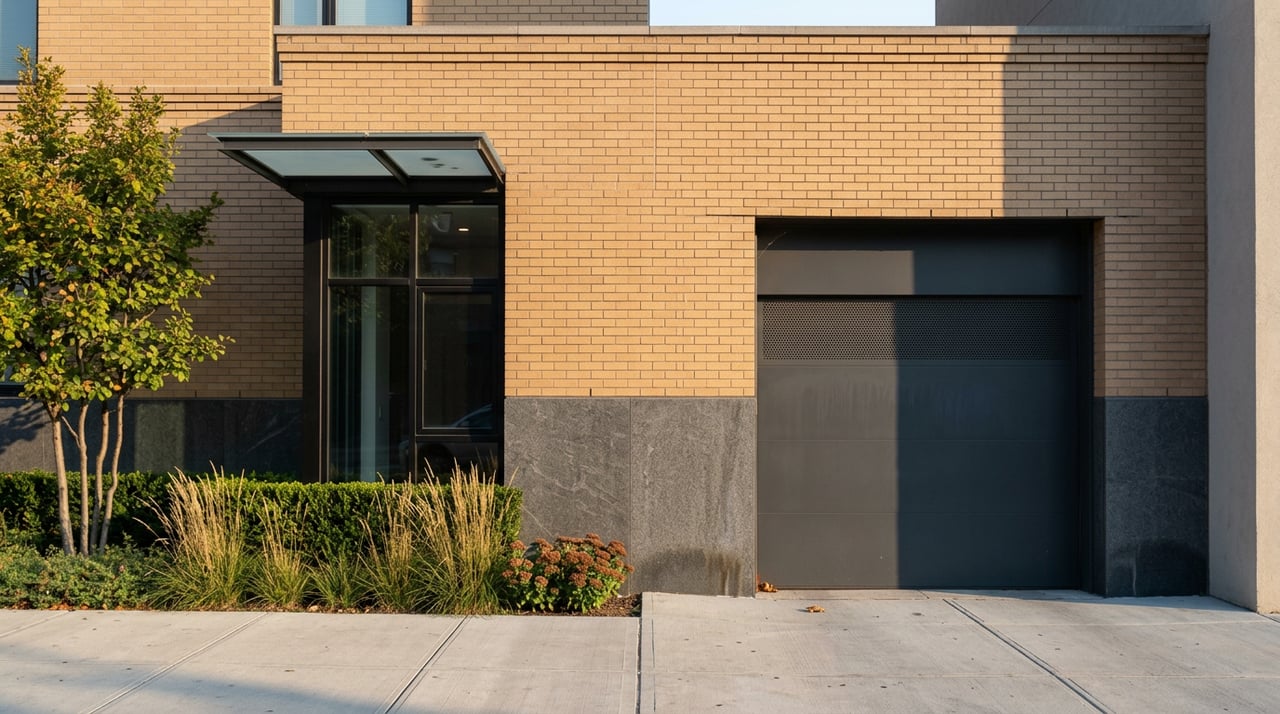
In October 2025, a penthouse at The Laurel sold for $10.1 million, the kind of number that makes Cherry Creek North's condo market look uniformly bulletproof. A few blocks away, in a mid-century tower like Cherry Creek Towers on Cherry Creek Drive South, a buyer can still find a remodeled unit priced well under $700,000. Both listings carry the same buried line in the HOA disclosure packet: the date of the last reserve study. That line, not the price tag, is what actually predicts whether a buyer is walking into a stable building or a bill they didn't budget for.
Most advice about condo shopping treats the monthly HOA fee as the risk signal. Pay more, get more protection. Cherry Creek's own building stock breaks that assumption. A boutique townhome association here might run $200 to $600 a month. A full-service tower with concierge and a heated garage can run $700 to $1,500 or more. Neither number tells a buyer whether the building's reserve fund is healthy or whether the garage under the parking level is three years from a six-figure repair. That information sits somewhere else entirely, and Colorado just passed a law that makes it easier to find in exactly the buildings least likely to need it.
What Colorado's reserve study law actually protects
According to Propfusion, every Colorado condo association is required under CCIOA to adopt a written policy on reserve funding, including when a reserve study will be prepared. That is a real requirement. The Reserve Study Group says Colorado does not mandate that every building commission a professional study on a fixed schedule. Depending on which legal guide a buyer reads, Colorado either already requires reserve studies or doesn't require them at all, and both readings are technically defensible. The policy is mandatory. Whether that policy actually calls for a professional study is up to each association's own board.
That gap is why House Bill 26-1099, which Reserve Advisors says was signed into law in April 2026, matters and also why it matters less than it sounds. The bill requires developers of new communities to commission a professional reserve study, projecting maintenance and replacement costs over thirty years, before control transfers from the declarant to the homeowners. It is a meaningful protection, and it is aimed squarely at brand-new construction. The Waldorf Astoria Residences Cherry Creek, a 37-unit building set to become Colorado's first Waldorf-branded property, is the kind of project this law was written for. When that association eventually transitions from builder to owner control, state law will require a professional 30-year study first.
Cherry Creek Towers, built in the mid-century boom, doesn't get that protection. Neither does NorthCreek or 250 Columbine or North Creek Residences, or any of the other established buildings that make up most of the neighborhood's condo inventory. Those associations transitioned from developer control decades ago. HB 26-1099 doesn't reach backward. The newest law on the books protects the buildings with the shortest track record and the least reason to worry yet, while the buildings actually old enough to be approaching major capital work are left exactly where they were before the bill passed: governed by a reserve policy that may or may not include a real study.
Why Cherry Creek's build history makes this personal
This isn't an abstract legal footnote in Cherry Creek specifically, because the neighborhood's condo stock was built in distinct waves. Small 1940s and 1950s bungalows were scraped and replaced with townhomes starting in the 1970s. That pace picked up once the Cherry Creek Shopping Center opened in 1990, pulling retail, then residential density, closer to Fillmore and the surrounding blocks. A 2014 zoning change lifted height limits again, which is when the mid-rise condo and office buildings that now define the skyline along 1st, 2nd, and 3rd Avenue started going up.
That means a buyer touring three Cherry Creek condos in one afternoon could be looking at three different structural ages, three different original construction standards, and three different points on the reserve-funding curve, none of which show up in the listing photos. A unit in a 1980s scrape-off townhome and a unit in a post-2014 mid-rise are not carrying the same risk just because they're both labeled Cherry Creek and both come with an HOA fee in a similar range.
What the fee range actually buys, and doesn't guarantee
| Building type | Typical monthly fee | What to check specifically |
|---|---|---|
| Boutique townhome HOA | Roughly $200 to $600 | Whether the association has ever commissioned a professional study, or only adopted the paperwork policy |
| Mid-rise, limited amenities | Roughly $350 to $800 | Age of roof, facade, and boiler systems relative to the last capital project |
| Full-service tower | Roughly $700 to $1,500+ | Garage waterproofing history and whether staffing costs are crowding out reserve contributions |
The fee tells you what services you're buying today. It does not tell you whether the association has money set aside for tomorrow. A well-run boutique HOA with a thin fee and a genuinely current reserve study can be a safer bet than a full-service tower charging triple the dues on paper-only reserve planning.
Underground and structured parking deserves its own line item here, because it is close to universal across Cherry Creek's condo and townhome stock and it is one of the most expensive things a reserve study can flag. Garage waterproofing and structural repair on an urban parking deck routinely runs into six figures, and it is the kind of project that a thin reserve fund defers until it can't be deferred anymore. Ask directly whether the garage has had an engineering inspection, not just a reserve study line item, and ask when.
The insurance renewal date matters as much as the reserve study date
Reserve funding isn't the only place Colorado associations have been squeezed. According to 9News, statewide HOA property insurance premiums climbed sharply between 2023 and 2025, driven by hail and wildfire exposure, and a Colorado HOA attorney testifying to state lawmakers described the jump as the biggest crisis she'd seen in seventeen years of practice. The scale of what a single event can do to an association's insurance bill is visible in what happened to a Louisville townhome community after the 2021 Marshall Fire: the board's annual premium went from $65,000 in June 2022 to $437,000 by June 2023. Cherry Creek isn't in a wildfire corridor the way Louisville is, but hail is a Front Range problem everywhere, and a master policy renewal that spikes flows straight into either higher dues or a special assessment, sometimes both.
State lawmakers took this seriously enough to order Colorado's Division of Insurance to study the HOA and condo insurance market, with a report required by January 1, 2026, a deadline that has already passed as of this writing, according to 9News. That alone is worth knowing before you make an offer: the state itself considers this enough of a live problem to formally study it. Ask for the master policy's renewal date and last two years of premium history along with the reserve study. A reserve fund can look fine on paper and still get raided by an insurance bill nobody saw coming.
What to actually request before you waive the contingency
- The most recent reserve study, or documentation of the association's reserve policy if no study has ever been done
- Percent funded, not just the dollar balance, since a fund can look large in absolute terms and still be underfunded relative to the building's age
- Master insurance policy declarations, deductible amount, and premium history for the past two renewal cycles
- Any engineering or waterproofing report specific to the garage or parking structure
- Board meeting minutes for the past twelve to twenty-four months, where funding gaps and upcoming projects usually surface before they become assessments
- Delinquency rate among owners, since a high rate often forces paying owners to absorb the shortfall
The work is in reading them before the inspection deadline, not after.
Frequently asked questions
Does the new Colorado reserve study law protect me if I'm buying into an established Cherry Creek building? No. HB 26-1099 applies to new communities transitioning from developer to homeowner control. Established associations like the ones built through Cherry Creek's 1970s-2014 development waves fall under the older CCIOA policy requirement, which mandates a written reserve policy but not necessarily a professional study.
What counts as a healthy reserve funding percentage? Industry practice treats anything meaningfully below 50 percent funded relative to the building's projected capital needs as a signal that a special assessment is more likely, not less.
Cherry Creek's mix of mid-century towers, scrape-off townhomes, and new construction like Cherry Creek West's incoming residential buildings means no two HOA packets tell the same story, even two blocks apart. If you're weighing a specific building and want a second, local read on its reserve study before you remove contingencies, Joey Hoisescu and The Lighthouse Collective can walk through the documents with you. Get a Free Home Valuation to start the conversation.
This article is general information, not legal, tax or financial advice. Consult a qualified professional about your situation.